YouTube Shorts: Short-Form Strategy
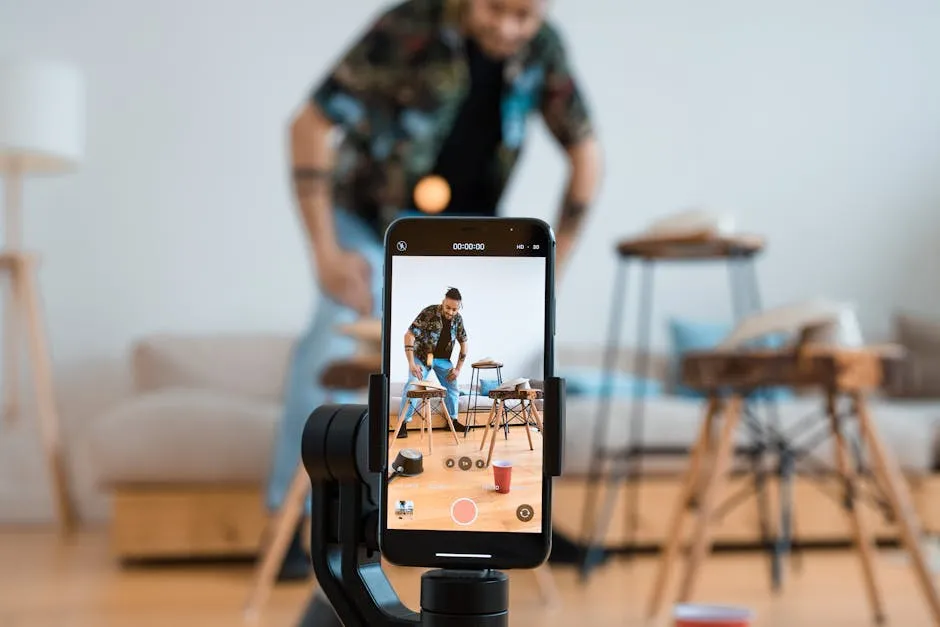
Let’s get straight to the point: YouTube Shorts are not a content strategy. They are a discovery engine. If you think you can survive solely by posting short vertical videos — Shorts can now run up to 3 minutes — you are leaving money and impact on the table.
Shorts are on-ramps. They are the appetizer, not the main course. Your long-form content and your courses are where the actual value lives.
Why Shorts Matter for Course Creators
The YouTube algorithm uses Shorts to figure out who you are and what your channel is about. When you post a Short, YouTube tests it with a small audience. If that audience watches and engages, YouTube shows it to more people.
But here is the real secret: those viewers need somewhere to go next.
The Unique YouTube Advantage
Unlike TikTok or Instagram Reels, YouTube gives you a native, frictionless way to link your Shorts directly to your long-form videos. You can use the “Related Video” feature to attach a full-length tutorial directly to your Short.
When a viewer finishes watching your 45-second tip, they can tap a button and immediately land on your 15-minute comprehensive video. No link in bio. No hoop-jumping. It is a direct funnel from discovery to depth.
Picture a marketing consultant using this exact method: a single Short about email funnels turns into a consistent stream of daily views on a flagship 20-minute video, which ultimately drives course enrollments.
Extract, Don’t Create
Your primary Shorts strategy should be extraction. You already have course modules and long-form YouTube videos. Those assets are goldmines for short-form content.
Go through your existing lessons and find the 30 to 60-second segments that deliver one specific, punchy insight. Cut them out, add captions, and post them. You are repurposing your highest-value assets into discovery tools.
Imagine a financial planning instructor taking a complex 25-minute module on tax strategies and extracting seven different Shorts from it. Each Short highlighted one specific technique. That is efficient content architecture.
The Two-Second Hook
You have exactly two seconds to hook the viewer. There is no room for a slow intro. You cannot start with, “Hi, my name is so-and-so, and today I want to talk about…” By the time you finish that sentence, the viewer is already gone.
Start with the payoff. Start with the counterintuitive statement. Start with the exact problem your target audience is facing. If your Short is about productivity, start with, “Stop using a to-do list.” Hit them immediately with something that disrupts their scrolling pattern.
Shorts SEO Still Matters
Even though Shorts are designed for rapid consumption, SEO still applies. The title and description of your Short tell the algorithm who should see it.
Do not just post a Short with a generic title like “Good tip.” Use your keywords. If your Short is about course creation, the title should be “The Mistake Killing Your Course Sales.” Use your description to add context and relevant hashtags.
Don’t Build a Shorts-Only Channel
Let me be absolutely clear: do not build a Shorts-only channel. Build a long-form channel, and use Shorts as on-ramps to that channel.
Your long-form videos build trust, demonstrate your teaching style, and provide the depth necessary to justify someone paying you for a course. Shorts cannot do that alone.
If you only have Shorts, you have an audience of entertained scrollers. If you have long-form content supported by Shorts, you have an audience of dedicated learners.
Shorts Monetization: Lower RPMs, Higher Volume
Shorts monetization exists, but manage your expectations. The RPMs on Shorts are significantly lower than long-form content. As of this writing, a million views on a Short typically pays in the ballpark of $50–150, whereas a long-form video with a million views could pay your rent.
However, Shorts make up for lower RPMs with higher volume. The algorithm can push Shorts to massive audiences quickly. But as a course creator, ad revenue is a bonus. The real monetization is the course sale that happens when a viewer watches your Short, clicks through to your long-form video, and buys your program.
Cross-Post Everywhere
You should never post a Short just to YouTube. Cross-post to TikTok and Instagram Reels simultaneously. You have already done the work of extracting the clip and adding captions. It takes an extra two minutes to upload it to the other platforms.
For the exact step-by-step workflow on how to do this without wasting your time, check out Content Machine, where the full cross-platform distribution strategy is broken down.
Your Action Plan
- Audit your existing course modules and long-form videos
- Extract the most punchy, valuable 30 to 60-second segments
- Front-load each clip with a two-second hook
- Optimize the title and description for search
- Attach a related long-form video to each Short
- Post to YouTube, TikTok, and Reels
- Repeat
That is how you turn short-form attention into long-form students.
Keep going — you're making progress through YouTube for Course Creators.
Need help? Email me ↗