Action Items: Every Lesson Needs a 'Do This Now'
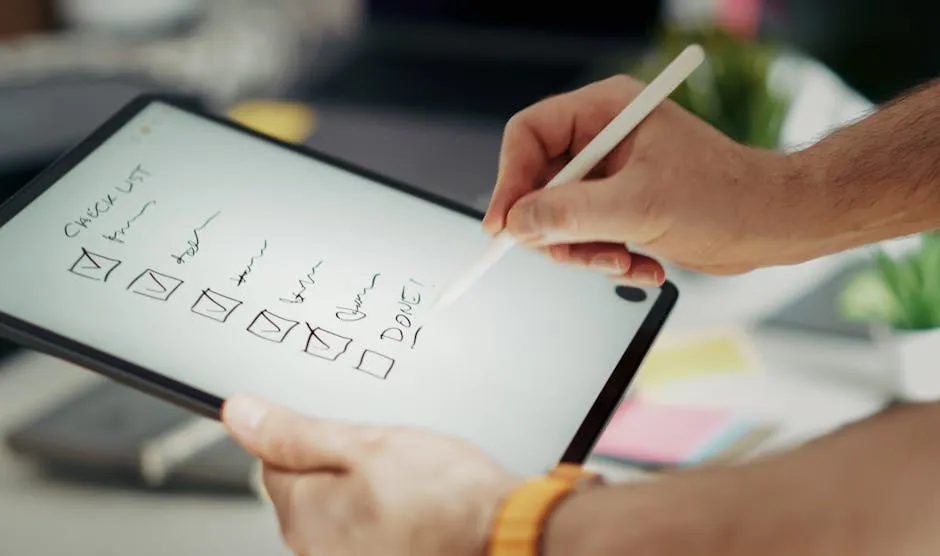
Every lesson you write should end with one thing: a specific, doable action the student takes right now. Not “think about this.” Not “consider how this applies.” A concrete thing they can do in the next five to fifteen minutes.
This is the action item, and it’s the most underused tool in course creation.
Why Action Items Matter
Without an action item, a lesson is just information. The student reads it, maybe understands it, and moves on. Nothing changes. The lesson becomes part of the 85% of course content that gets consumed but never applied.
With an action item, the lesson becomes a mini-experiment. The student tries the thing. They see if it works for them. They produce a small output. The lesson changes from something they read into something they did.
Action items are what separate a course from a blog series. A blog series informs. A course transforms. The difference is doing.
Writing Good Action Items
A bad action item is vague. “Reflect on what you’ve learned.” “Consider your options.” “Think about how this applies to your business.” These produce nothing.
A good action item is specific, time-bounded, and produces a visible output.
Specific: Tell them exactly what to do. Not “review your pricing” but “write down your current price, then calculate what it would be if you raised it by 20%.”
Time-bounded: Give them a rough time frame. “Spend 5 minutes on this.” “This should take about 10 minutes.” Without a time frame, students assume it will take longer than it does and put it off.
Produces output: The student should have something to show for it. A written answer, a completed checklist, a list, a decision, a draft. Something they can look at and say “I did that.”
Action Item Formulas
Here are patterns that work:
The list. “Write down 3 [things] before you move on.” Quick, specific, produces a list.
The decision. “Choose between [Option A] and [Option B]. Write your choice and one sentence explaining why.” Forces commitment.
The draft. “Draft your [specific thing] using the template from this lesson. Don’t overthink it. 10 minutes max.” Low stakes, gets them started.
The test. “Try [specific technique] on your own [project/website/account]. Note what happens.” Real-world application.
The review. “Look at your [existing thing] through the lens of [framework from lesson]. Write down 2 things you’d change.” Applies new knowledge to existing work.
Placement
The action item goes at the end of the lesson. Not in the middle. Not as a sidebar. The last thing the student reads before they decide whether to continue to the next lesson or close the tab.
Format it distinctly so it stands out:
- Use a heading: “Your Action Item” or “Do This Now”
- Use a single paragraph or a short numbered list
- Keep it to one action, not three
- Make it the last element before the “Next lesson” link
The Compound Effect
One action item per lesson doesn’t sound like much. But a course with 20 lessons, each with one specific action item, means the student has done 20 concrete things by the time they finish. They’ve built a pricing plan, written a sales page outline, created a materials map, designed two worksheets, written five email subject lines, chosen a platform, and drafted their launch plan.
That’s a course that changed something. That’s a student who got results. And that’s a student who might tell a friend or write a testimonial.
All from one specific prompt at the end of each lesson.
Your Task
Go through your lesson list one more time. For each lesson, write a single action item using one of the formulas above. Keep each one to one or two sentences. Make sure every action item produces something the student can see.
This is the last design step. Next, you test everything with real people.
Keep going — you're making progress through Create Course Materials That Get Results.
Need help? Email me ↗