
How to Price Your Online Course (Without Undercharging)
You just finished recording your course. Twenty modules. Worksheets. A bonus resource library. You poured weeks into this thing.
Now comes the question that makes every first-time creator sweat: How much do I charge?
If you’re like most people, you’ll panic and pick $29. Maybe $47 if you’re feeling bold. You’ll tell yourself it’s “accessible” and that you’ll raise the price later.
Don’t do that.
Here’s the truth: undercharging doesn’t make your course more attractive. It makes it invisible. And it attracts the wrong students — the ones who refund after downloading everything, never finish a single module, and leave a two-star review because the font size wasn’t big enough.
I’ve priced courses from $27 to $1,997. I’ve made every mistake in the book. This post is what I wish someone had handed me the first time around.
The Three Ways to Price a Course
Every pricing strategy falls into one of three buckets. Two of them are bad. One of them prints money.
1. Cost-Plus Pricing
This is where you add up your hours, multiply by some hourly rate, factor in hosting costs, and call it a day.
“I spent 80 hours making this course, and I value my time at $50/hour, so… $4,000 divided by… let’s say I’ll get 100 students… that’s $40.”
This feels logical. It’s also irrelevant to your buyer. Your student doesn’t care how long you spent recording videos. They care about what the course does for them.
Cost-plus is useful as a floor — you should know your break-even point — but it’s terrible as an actual pricing strategy.
2. Market-Based Pricing
This is where you stalk your competitors, see what they’re charging, and pick a number in the same neighborhood.
“Three other notary courses are priced at $197, $247, and $297, so I’ll go with $247.”
This is better than cost-plus because at least you’re anchored to reality. But it has a fatal flaw: it assumes your competitors know what they’re doing. Most of them don’t. Most of them also panicked and picked $29.
Market research is worth doing. Just don’t let it be your only input.
3. Value-Based Pricing
This is the one that works.
Value-based pricing ignores your costs and your competitors and focuses on one thing: what transformation does your course deliver, and what is that transformation worth to your student?
Let’s say you teach a course on how to pass the notary exam and start a loan signing business. A successful loan signing agent makes $75,000–$125,000 per year. Your course gets someone from zero to their first signing in 30 days.
Is that worth $497? To someone about to start a six-figure side business? It’s a rounding error.
Here’s how to calculate it:
- What is the end result worth in dollars? (new income, money saved, time reclaimed)
- How fast does your course get them there compared to doing it alone? (months of trial and error vs. weeks)
- What’s the cost of NOT taking your course? (mistakes, lost income, wasted months)
Multiply those factors together and you’ll usually land on a price that’s 3-5x higher than what your gut told you.
Value-based pricing wins. Every time. Use it.
The “Scary but Doable” Test
Here’s a mental exercise that’s worth more than the rest of this post combined.
Pick the price you think your course should be. Got it? Good. Now double it.
Say that number out loud. How does it feel?
If you feel a little nervous — like, “Can I really charge that?” — you’re probably in the right ballpark. The right price for your course is almost always the number that makes you slightly uncomfortable to say out loud.
Why? Because your comfort zone is calibrated to what you’d pay, not what your ideal student would pay. You’re not your customer.
The students who will pay $497 for your course are not the same people who would hesitate at $97. They’re further along. They’re more committed. They value their time more. And they’re the ones who will actually do the work, get results, and become your best testimonials.
Pricing Tiers: Where Most Courses Should Live
I break course pricing into three tiers. Not because there’s a rule about this, but because the market consistently sorts itself this way:
| Tier | Price Range | Best For |
|---|---|---|
| Basic | $97–$297 | Mini-courses, intro workshops, “try before you buy” offers |
| Standard | $297–$697 | Full courses with clear outcomes and supporting materials |
| Premium | $697–$1,997+ | Comprehensive programs with coaching, community, or certification |
Most first-time creators should start at Standard. Not Basic. Here’s why:
A $97 course signals “I made this in a weekend.” A $497 course signals “I know what I’m talking about, and this will change your business.” Both might contain the exact same content. The price is part of the product.
If you’re worried your course isn’t “worth” Standard pricing, the fix isn’t to lower the price — it’s to make the course better. Add templates. Add case studies. Add a bonus module. Add a private community. Make it worth $497, then charge $497.
Payment Plans: Your Conversion Secret Weapon
Anything over $200 should have a payment plan. Period.
A student who can’t swing $497 today might happily pay $179/month for three months. Same revenue for you. Same total price for them. But you just removed the biggest objection before they even had to voice it.
Payment plans increase conversions by 20–30% across every course I’ve priced. They’re not a discount — they’re a different way to pay.
Keep it simple:
- Under $200: pay in full only
- $200–$500: offer 2 payments
- $500–$1,000: offer 3 payments
- Over $1,000: offer 3–4 payments
Don’t go beyond 4 payments. You’re not a bank. And make sure the payment plan total is slightly more than the pay-in-full price (10–15% more is standard). This rewards people who pay upfront and covers your risk on payment plans.
The Discount Trap (And What to Do Instead)
At some point, you’ll be tempted to run a “50% off” sale. Maybe you’re launching and want a big first week. Maybe sales are slow and you want a boost.
Don’t discount.
Here’s what happens when you discount your $497 course to $247:
- The person who paid $497 last month feels like a sucker
- The person who pays $247 values the course at $247 (and acts accordingly)
- You’ve now trained your audience to wait for sales
- You’ve permanently anchored your course’s perceived value at the lower price
Instead of discounting, add bonuses.
“Enroll by Friday and you get:
- My personal template library ($97 value)
- A 30-minute 1-on-1 strategy call ($150 value)
- Access to my private student community ($49/month value)”
Same urgency. Same “deal” feeling. But your course price stays intact. The next person who finds your course next Tuesday sees $497 — not $247.
This works because bonuses cost you almost nothing to deliver but dramatically increase perceived value. A template you already made costs you zero marginal dollars to include. A community you’re already running costs you nothing to add someone to.
Why Cheap Courses Attract Cheap Students
I need to say this plainly because I see it ruin creators every week.
A $29 course attracts a specific type of buyer: the serial course hoarder. This person has 47 courses they’ve never finished. They buy on impulse, skim the first module, request a refund, and move on. They’ll leave you a bad review because your 1080p video wasn’t 4K.
A $497 course attracts a different buyer: the person who has a problem and is ready to solve it. They’ve researched their options. They’re investing real money. They show up. They do the work. They finish the course. They get results. They tell their friends.
Price is a filter. It filters for commitment.
When I raised my notary course from $97 to $397, three things happened:
- Sales dropped by about 20% (fewer impulse buys)
- Completion rates tripled (more committed students)
- Refund requests dropped to nearly zero
- Testimonials and word-of-mouth referrals went through the roof
Revenue went up. Student results went up. Support headaches went down. All from raising the price.
Udemy vs. Your Own Site: The Pricing Control Problem
If you host on Udemy, you don’t control your price. Udemy runs constant $9.99 sales. Your $99 course will be available for $9.99 more often than not. You’ll get a cut of $9.99 minus Udemy’s take. That’s maybe $4 per sale.
On your own site — whether that’s a platform like GoHighLevel, or your own WordPress setup — you control everything. The price. The offer. The payment plans. The bonuses. The email sequence. The follow-up.
Udemy has its uses — it’s decent for building an audience and getting practice teaching. But for serious revenue and serious students, you need your own platform where you set the rules.
The Silver / Gold / Platinum Framework
If you want to maximize revenue and serve students at different levels, offer tiered pricing. This isn’t a new concept, but course creators mess it up all the time, so here’s how to do it right.
Silver — Course Only ($297–$497) All the core content. Every module. Every worksheet. This is the self-serve option for self-starters who just want the information and will run with it.
Gold — Course + Extras ($497–$997) Everything in Silver plus templates, swipe files, checklists, and access to a student community. The extras should be things that save time — done-for-you resources the student would otherwise have to create from scratch.
Platinum — Course + Everything ($997–$1,997+) Everything in Gold plus live coaching calls, 1-on-1 support, or direct access to you. This is for the student who wants hand-holding and is willing to pay for it.
The key to making tiers work: each tier should feel like an obvious upgrade. Gold shouldn’t be “the same thing plus a PDF.” It should feel like a meaningfully different experience. And Platinum should feel like having you in their corner.
Most students will pick Gold. That’s fine. Some will pick Silver because they’re price-sensitive self-starters. A few will pick Platinum because they want maximum support. Everyone wins.
What I’d Do If I Were Starting Today
If I were pricing my first course tomorrow, here’s exactly what I’d do:
- Figure out the transformation. What does my student walk away able to do? What’s that worth in dollars?
- Price at Standard tier ($297–$697). Not because I’m greedy, but because the course is better for the student at this price point.
- Offer a 3-payment plan. “3 payments of $179” sounds very different from “$497 today.”
- Use bonuses instead of discounts. Early bird gets extra templates, not a lower price.
- Build it on my own platform. I control the price, the data, the student relationship, and the follow-up. That’s non-negotiable.
And I’d use the Price Your Course framework to validate the number before I launched.
Stop Overthinking It
Here’s the thing nobody tells you about pricing: you can always change it.
Launch at $397. See what happens. If it sells out, raise it. If it crickets, add more value (don’t lower the price). Your first price is your best guess, not a blood oath.
The bigger mistake isn’t pricing too high — it’s pricing too low and never finding out what your course was actually worth.
Pick a number that scares you a little. Offer a payment plan. Add bonuses for early action. Build it somewhere you control — I use GoHighLevel for this — and own the relationship.
Your course is worth more than you think. Price accordingly.
Ready to build a course people actually pay for? Start with How to Create an Online Course for the full step-by-step framework, or jump straight to Price Your Course to nail down your number.
Frequently Asked Questions
Why is $29 or $47 usually a mistake?
Ultra-low prices attract course hoarders who buy on impulse, never finish, and often request refunds with bad reviews. Higher prices filter for committed students who do the work.
What pricing method to use?
Value-based pricing: focus on what transformation your course delivers and what that’s worth, not your costs or competitor prices.
When to offer a payment plan?
Anything over $200 should have one. Payment plans increase conversions by 20-30% without actually discounting your course.
Why avoid discounting?
Discounting devalues your course, makes full-price buyers feel cheated, trains your audience to wait for sales, and permanently anchors perceived value lower.
What tier for a first-time creator?
Start at Standard ($297-$697). A $497 course signals expertise and attracts committed students, while $97 signals it was made in a weekend.
You Might Also Like

Can You Create an Online Course Without Being on Camera? (Yes, Here's How)
Camera shy? You don't need to show your face. Screen recordings, slide presentations, AI avatars, and audio-only courses all work. Here are the 4 formats that don't require a camera.

How Long Should Your Online Course Be? (Here's What the Data Says)
Short answer: as long as it takes to deliver the transformation you promised. Long answer: here's what completion rates, student feedback, and 39,000+ trained professionals have taught me.
How Much Does It Cost to Create an Online Course? (The Real Numbers)
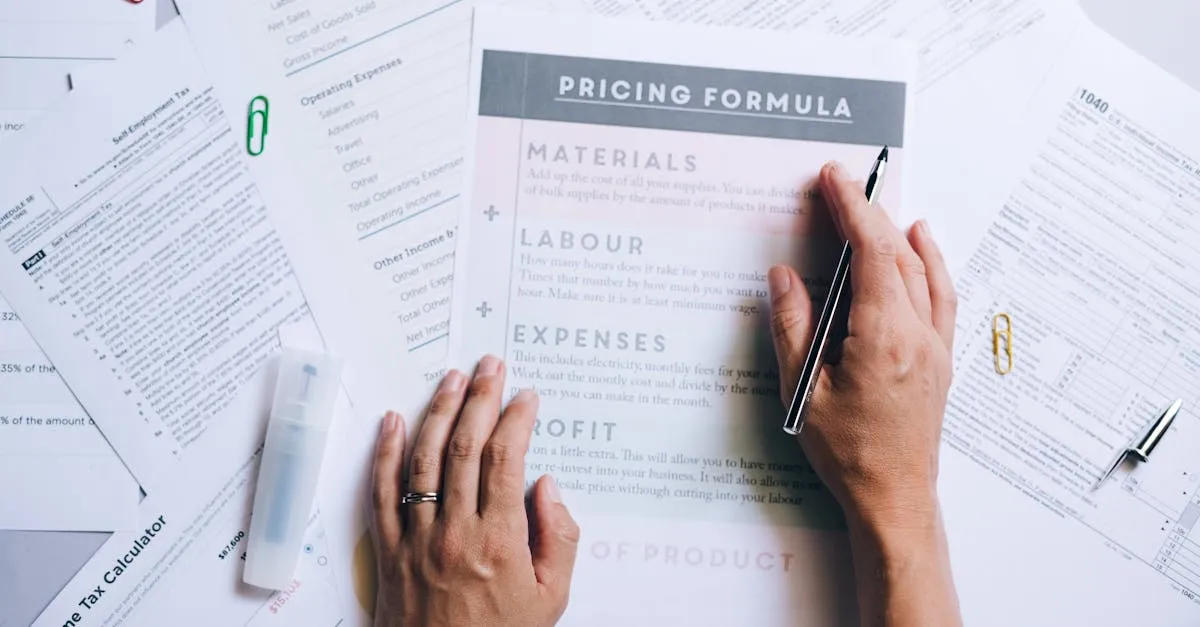
The honest cost breakdown from $0 to $5,000+. Most course creators spend way less than they think — and waste money on the wrong things. Here's where to invest and where to save.