Choose Your Podcast Format
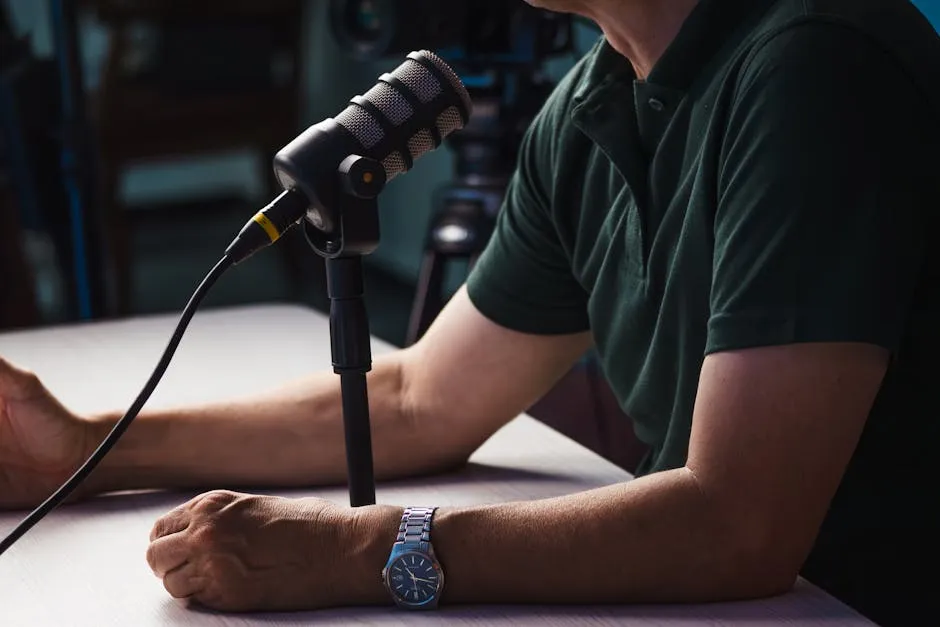
You’ve got three real options for your podcast format. Each one changes what your week looks like, how fast you grow, and how the show connects to your courses.
Let’s break them down.
1. Solo Format
You talk. Alone. Into a microphone.
What works: No scheduling conflicts. No one cancels twenty minutes before recording. You control the narrative completely. Batching becomes simple — lock yourself in a room on a Saturday, knock out four episodes.
What doesn’t: You carry every single episode. There’s no one else to bring energy when you’re tired. And you miss out on the audience-sharing that comes with guests.
Best for: Course creators who already have an audience and want to deepen trust. If people are already buying your courses, solo episodes let you teach more and sell more without needing external validation.
I’ve seen course creators in the finance space use solo shows effectively — short, tight episodes that directly preview course concepts and drive listeners to enroll.
2. Interview Format
You talk with guests. Usually one per episode.
What works: Guests share your episodes with their audiences. That’s how you grow. You also get focused time with experts in your niche — people you’d struggle to get a meeting with otherwise. There’s a reason the “Dream 100” strategy works so well here: you’re not cold-emailing asking for favors, you’re offering exposure.
Less pressure on you to generate every idea. The guest brings half the content.
What doesn’t: Scheduling becomes a part-time job. Time zones, cancellations, reschedules. Some guests are terrible on mic — nervous, rambling, or somehow both boring and self-promotional. Prep time adds up if you’re doing it right.
Best for: Course creators who want to grow fast and build a network simultaneously. If your email list is under 5,000, this format gives you the best shot at rapid audience expansion.
3. Hybrid Format
You mix solo and interview episodes. Maybe two interviews a month, two solos.
What works: You get the growth benefits of interviews and the teaching depth of solos. It keeps the show fresh for listeners.
What doesn’t: You have to maintain two different production workflows. It takes discipline to actually do both well instead of defaulting to whatever feels easier that week.
Best for: Creators who’ve found their rhythm and want the advantages of both approaches.
The Hidden Superpower of Interviews for Course Creators
Here’s what most people miss: every interview is dual-purpose content.
You’re getting 30-60 minutes of focused conversation with someone who has expertise your students need. That conversation becomes an episode. But it also becomes a relationship.
One course creator built their entire advanced module around insights from their first 40 podcast guests. The interviews were research. The guests became affiliates. Some became collaborators on future courses.
You’d pay for that kind of access in almost any other context.
My Recommendation
Start with interviews if you’re new to podcasting. The growth advantage matters more in the beginning than production elegance. You’ll learn how to conduct conversations, edit audio, and publish consistently — all while building relationships that pay off beyond the show.
Once you’ve hit your stride — maybe 20-30 episodes in — shift to hybrid. Add solo episodes that teach directly from your course framework. Use interviews for reach, solos for depth.
But here’s the thing that actually matters: pick a format and stay consistent. Listeners don’t tune out because you chose “wrong.” They tune out because you keep changing what the show is.
A predictable format builds habit. Habit builds audience. Audience builds course sales.
Don’t overthink this decision. Pick one. Start. Adjust later.
Keep going — you're making progress through Podcasting for Course Creators.
Need help? Email me ↗